How Does GreenCIP Chemical Recovery Work?

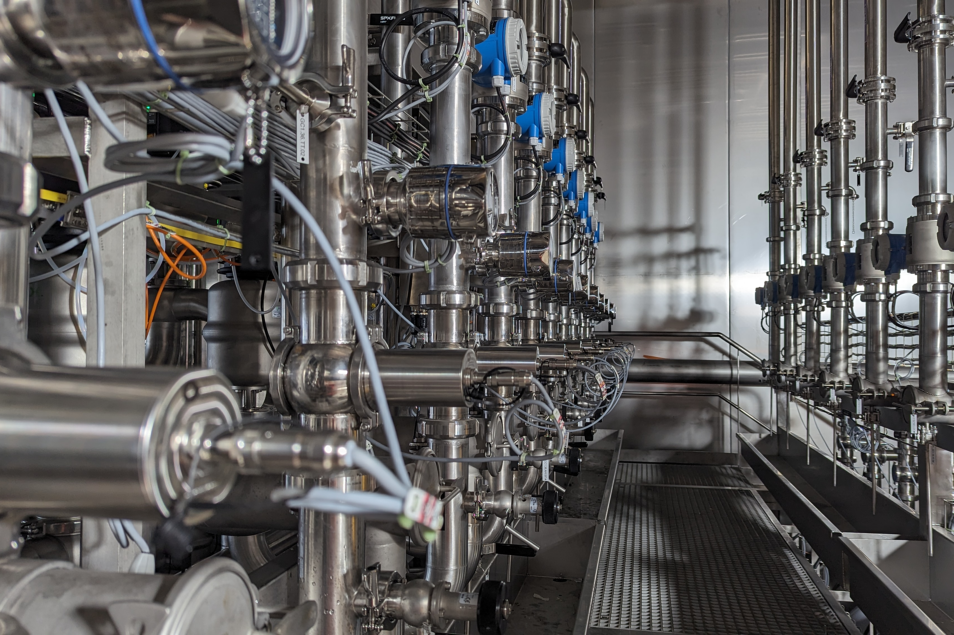
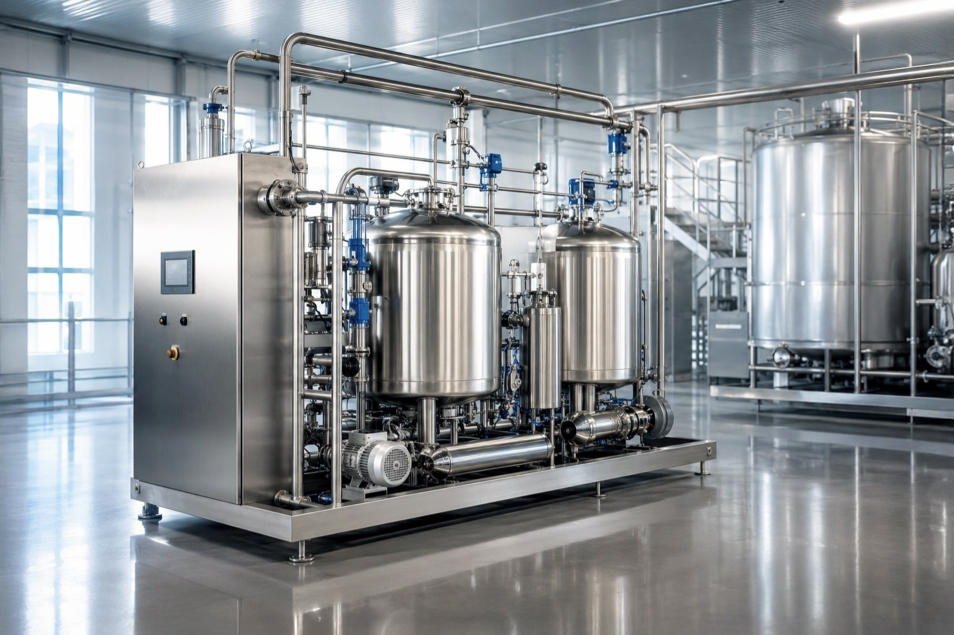
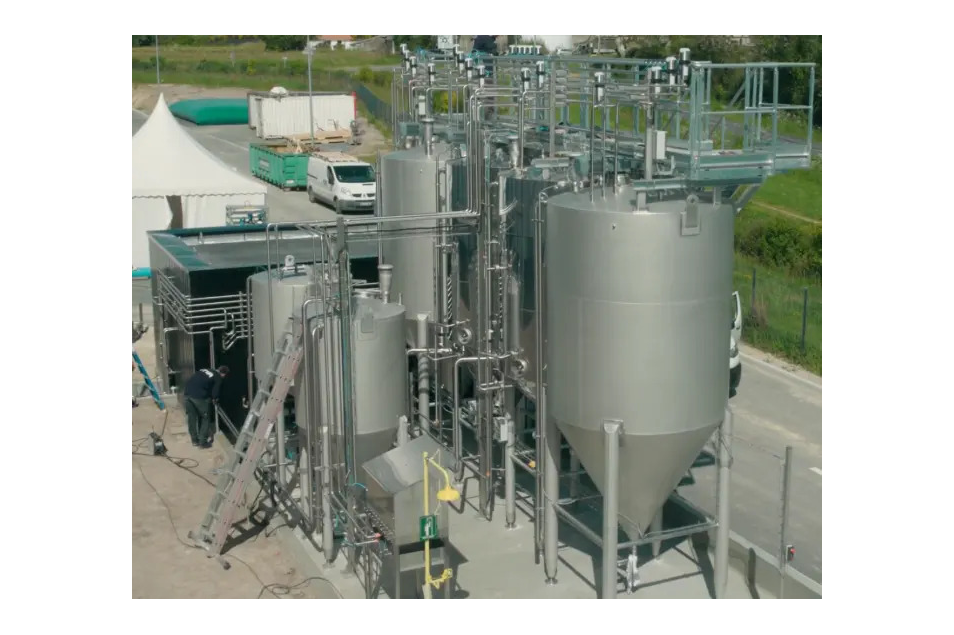
GreenCIP regenerates used caustic cleaning solutions from the existing CIP process, making them suitable for reuse. The GreenCIP Chemical Recovery Unit is integrated into the existing CIP system as an add-on. The existing CIP system remains responsible for the cleaning process, while GreenCIP adds a controlled regeneration step. This enables chemical recovery without the need to replace the existing CIP system.

Where is GreenCIP integrated into the CIP process?

Where is GreenCIP integrated into the CIP process?

During every CIP cycle, the contaminant load in the cleaning caustic increases. Product residues and organic components enter the cleaning solution, gradually reducing the quality of the caustic.

Without chemical recovery, the used solution is eventually discharged, neutralized and replaced with fresh NaOH. GreenCIP introduces a regeneration step before this happens.

Used caustic is routed from the existing CIP process to the Chemical Recovery Unit, treated and then made available for reuse within the CIP system. The existing cleaning system remains intact. This is a key principle of GreenCIP: optimizing existing CIP infrastructure rather than replacing it.

The Regeneration Process Within GreenCIP

GreenCIP technology does not use membranes. Contaminants are removed through a physicochemical process in which contaminant particles are brought together and subsequently separated from the cleaning solution.

The process consists of several controlled steps.

1. Coagulation
During the coagulation phase, a treatment reagent is added. This changes the structure of dispersed contaminant particles, allowing them to interact more easily and facilitating their subsequent separation.

The purpose of this step is to prepare the contaminants for further separation by causing organic particles to aggregate (clump together).

↓

2. Flocculation
During flocculation, the particles formed are brought together into larger flocs. These larger structures can then be separated more efficiently from the liquid phase.

The flocculant encapsulates the organic material. As a result, the organic material is neutralized and no longer contributes to the oxygen demand in wastewater treatment.

↓

3. Decantation
During the decantation step, the concentrated contaminant fraction is separated from the treated cleaning solution. This produces two separate streams: one containing the separated contaminants and the other containing the regenerated cleaning solution.

↓

4. Regenerated Caustic Solution Returned to the CIP Process
After treatment, the regenerated caustic solution is returned to the CIP system.

Depending on the process conditions, up to 90% of the treated cleaning solution can be reused.


What Happens to the Separated Contaminants?

During the regeneration process, the contaminant fraction is concentrated and separated from the liquid cleaning solution. The regenerated caustic solution remains available for reuse within the CIP process. The concentrated contaminant fraction is removed separately from the process.

As a result, the entire used cleaning solution no longer needs to be discharged as waste. A larger proportion of the available NaOH can therefore continue circulating within the production process.

The concentrated contaminant fraction (slurry) no longer contributes to the wastewater load. The organic material is encapsulated by a neutral flocculant.
Chemical Recovery Without Membranes

Some chemical recovery solutions use membrane technology to remove contaminants from used cleaning solutions. However, membranes have a limited service life and need to be replaced periodically.

This results in recurring costs associated with:

  • Higher water consumption due to periodic membrane cleaning
  • Higher energy consumption due to pressure drops across the membranes
  • No neutralization of organic material, resulting in a continued wastewater treatment load
  • Membrane replacement;
  • Membrane-specific consumables;
  • Maintenance;
  • Periodic maintenance and replacement activities.

GreenCIP takes a different approach. By using coagulation, flocculation and decantation, no membranes are required in the regeneration process.

This eliminates the need for periodic membrane replacement and the associated recurring replacement costs.

GreenCIP Integration into an Existing CIP Configuration

GreenCIP Integration into an Existing CIP Configuration

The technical feasibility of GreenCIP is not determined solely by the chemical recovery unit itself. Equally important is its integration with the existing production and CIP infrastructure. D&S therefore assesses the current CIP configuration and relevant process interfaces in advance.

This assessment includes, among other things:

  • Existing CIP tanks and circuits;
  • Supply and return flows;
  • Available flow rates;
  • Buffer volumes;
  • Piping and connections;
  • Instrumentation;
  • Electrical infrastructure;
  • PLC and automation interfaces;
  • Available space;
  • Operating hours and CIP frequency.

Based on this assessment, the GreenCIP configuration that best fits the existing installation from a technical perspective is determined.

Sizing Based on the Actual CIP Profile

The required GreenCIP capacity is not determined solely by the size of the production facility. Proper sizing depends on the complete CIP profile.

D&S evaluates several factors, including:

  • CIP volume;
  • Volume of used caustic solution;
  • Number of CIP cycles per day;
  • NaOH concentration;
  • CIP flow rate;
  • Available processing time;
  • Operating hours;
  • Preferred batch or continuous operation.

GreenCIP is available in three standardized capacities:

CRU 2
2,000 l/h

CRU 4
4,000 l/h

CRU 6
6,000 l/h

The selection is based on a combination of technical capacity, available processing time and economic utilization. A larger unit is therefore not automatically the best solution.

Process Control During Regeneration

A stable chemical recovery process requires continuous control of relevant process parameters. Depending on the configuration, various process parameters are monitored, including:

  • pH;
  • Conductivity;
  • Temperature;
  • Dosing;
  • Process status.

The process control system is integrated into the GreenCIP skid and, where necessary, aligned with the existing automation system. This ensures that GreenCIP operates not as a standalone unit, but as an integrated and controlled process step within the CIP infrastructure.


Technical Data and Process Interfaces

The technical feasibility of GreenCIP is not determined solely by the chemical recovery unit itself. Equally important is its integration with the existing production and CIP infrastructure. D&S therefore assesses the current CIP configuration and relevant process interfaces in advance.

This assessment includes, among other things:

  • Control and operation;
  • Measurement and control instrumentation;
  • Materials of construction;
  • Process and electrical connections;
  • Required utilities;
  • Filtration;
  • Data logging and trend analysis.

This provides insight not only into the current operation of the installation, but also into its performance over time.

Monitoring and Process Data

Monitoring and Process Data

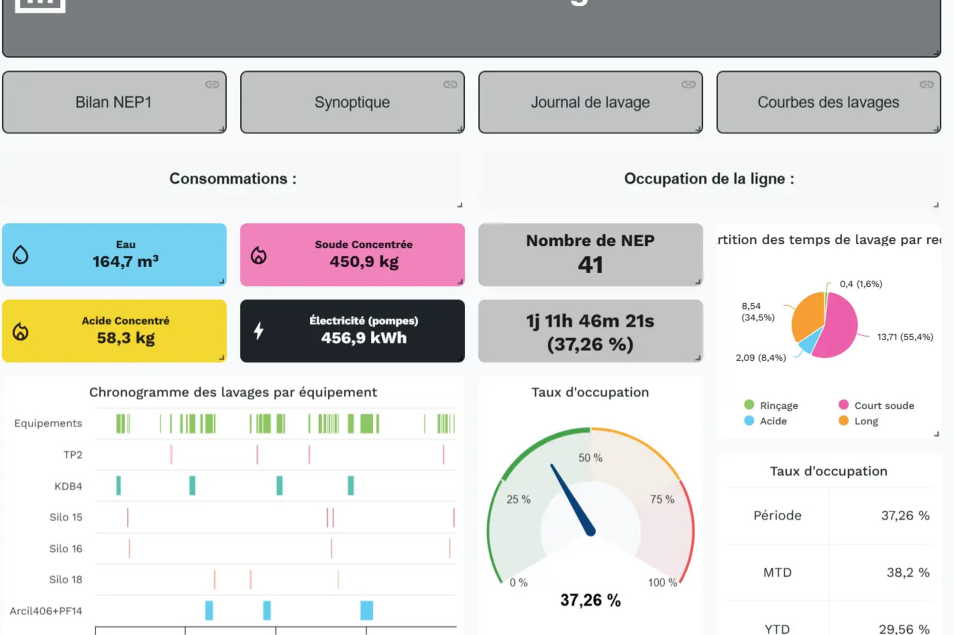
Chemical recovery delivers the greatest value when its performance is not only technically visible but also measurable. GreenCIP can therefore be equipped with process monitoring and data logging capabilities.

This allows various parameters to be tracked, including:

  • Process conditions;
  • Chemical consumption;
  • CIP performance;
  • Process deviations;
  • Long-term trends;
  • Achieved savings.

This makes it possible not only to assess the current operation of the installation, but also to gain insight into long-term optimization opportunities and financial performance.

Technical Feasibility and Economic Value

The technical performance of GreenCIP is one aspect of the business case. Ultimately, what matters most is the value that regeneration delivers within your specific CIP process.

D&S therefore analyzes several factors, including:

  • Annual NaOH consumption;
  • Frequency of CIP caustic solution replacement;
  • Water consumption;
  • CIP cycles;
  • Temperatures;
  • Energy consumption;
  • Wastewater volume;
  • Neutralization and treatment costs.

Based on this data, we calculate an initial estimate of the potential savings and expected payback period.

Your Current Situation
Chemicals + Water + Energy + Wastewater

With GreenCIP
Lower operating costs + Reduced environmental impact

Result
An investment with a potential payback period starting at approximately 18 months.

Indicative GreenCIP Results

Up to 80% Less Chemical Consumption

Up to 50% Less Water Consumption

Up to 30% Less Energy Consumption

Up to 90% Reuse of Treated Caustic Solution

Payback Period Starting at Approximately 18 Months

From Process Analysis to Commissioning

GreenCIP is implemented by D&S Process Integrators as an integrated process solution. The implementation process consists of five steps.

  1. Process Analysis
    Analysis of the existing CIP configuration, cleaning flows, volumes, operating hours and process data.
  2. Business Case
    Calculation of current consumption and potential savings.
  3. Engineering
    Determination of capacity, process interfaces, piping, instrumentation and automation.
  4. Integration
    Installation and connection of the GreenCIP skid within the existing system.
  5. Commissioning and Optimization
    Installation of the GreenCIP skid and connection to the existing CIP and production infrastructure.

Ready to find out whether GreenCIP is suitable for your existing CIP system?

Additional CIP Optimization with OptiClean

Additional CIP Optimization with OptiClean

GreenCIP focuses on regenerating used caustic cleaning solutions. In addition, the broader CIP process can be evaluated to determine whether certain cleaning steps take longer than technically necessary.

OptiClean uses UV and IR technology to measure contamination levels directly within the CIP flow. This provides additional insight into the actual condition of the CIP flow, rather than relying solely on predefined cleaning times.

Potential optimizations include:

  • Shorter CIP cycle times;
  • Lower water consumption;
  • Reduced product loss;
  • Increased available production capacity;
  • Early detection of process deviations.